
In the landscape of construction capital equipment, few assets deliver the comprehensive return profile of a Ready-Mix Concrete (RMC) plant. While investments in excavators, cranes, or haul trucks address discrete tasks within the construction workflow, an RMC plant occupies a fundamentally different strategic category. It is not merely a tool; it is a production facility—a vertically integrated manufacturing asset that transforms raw commodities into a high-value, precisely engineered construction material. This distinction is critical. The value proposition of an RMC plant extends far beyond its mechanical function. It encompasses supply chain sovereignty, quality assurance, economic scalability, and enduring asset resilience. When evaluated through rigorous financial and operational metrics, the RMC plant consistently demonstrates superior long-term value creation compared to virtually any other construction investment of comparable capital outlay.
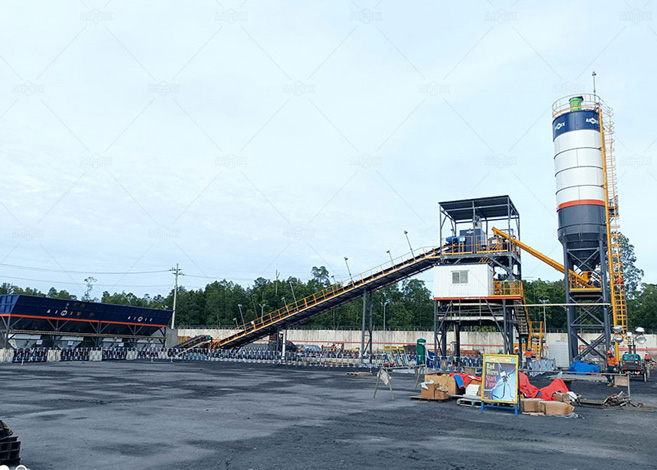
The Economic Architecture of Vertical Integration
The foundational value driver of an RMC plant investment is the fundamental restructuring of your cost architecture. Ownership transforms concrete from a purchased commodity, subject to third-party margins and volatile logistics surcharges, into a manufactured input produced at internal cost.
Margin Capture and Cost-Predictability
Every cubic meter of concrete purchased from a commercial supplier includes embedded profit margins for the producer, transporter, and often a re-seller. An owned RMC stationary concrete batching plant allows you to capture these margins directly. The cost differential between delivered ready-mix and the raw material inputs—cement, aggregates, water, admixtures—is substantial, typically ranging from 30% to 50%. This delta flows directly to your bottom line on every cubic meter you consume. Furthermore, this model replaces the volatility of third-party pricing schedules with predictable, formula-based raw material costs, enabling far more accurate project bidding and margin protection against market fluctuations.
Elimination of Supply Chain Rent Extraction
Beyond the direct material margin, RMC plant ownership eliminates a cascade of ancillary costs: delivery fees, minimum load charges, after-hours surcharges, and demurrage penalties for truck delays. These are not value-added services; they are rent extracted by suppliers exploiting scheduling constraints and site access limitations. An on-site or strategically located plant neutralizes these charges entirely, converting a complex, multi-vendor logistical exercise into an internal production scheduling function.
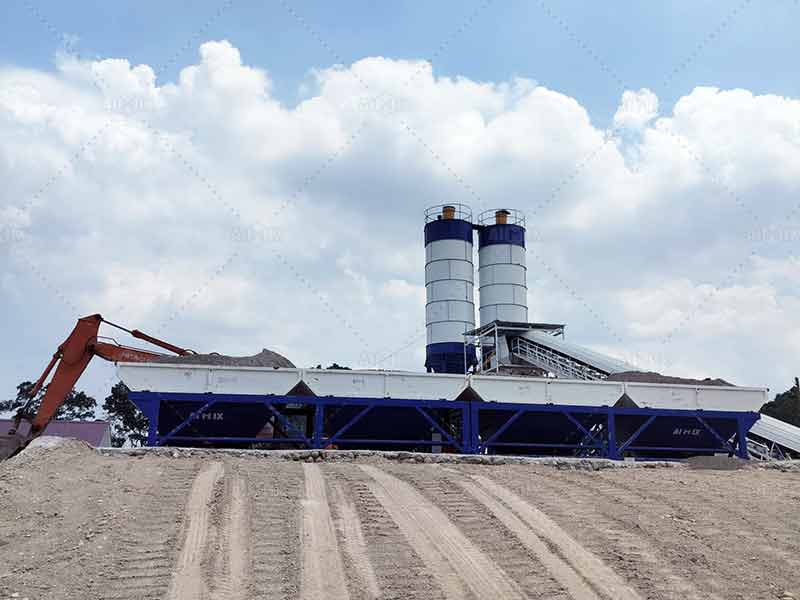
Operational Sovereignty and Quality Assurance
The economic case for RMC plant ownership is compelling, but the operational and quality advantages are equally decisive. These factors directly influence project velocity, structural integrity, and reputational capital—assets not easily quantified but profoundly impactful on long-term profitability.
Schedule Certainty and Critical Path Protection
Construction projects are exercises in sequential dependency. A concrete pour delayed by a supplier’s truck breakdown or traffic congestion halts not only the concrete crew but all subsequent trades: rebar fixers, finishers, electricians, and masons. This cascading delay erodes schedule contingency and accrues liquidated damages. An owned RMC plant provides absolute control over the production schedule. Concrete is batched precisely when the formwork is ready and the placement crew is mobilized. This sovereignty protects the project’s critical path and provides a reliability advantage that clients recognize and value, often translating into preferential bidding status and premium pricing.
Mix Design Fidelity and Quality Traceability
Commercial RMC producers serve hundreds of clients; your specific mix design is one among many. Variations in batching accuracy, aggregate moisture compensation, and admixture dosing are common. An owned concrete plant for sale, equipped with modern computerized controls and calibrated load cells, produces every batch to the exact specified formulation. This consistency is not a luxury; it is essential for high-performance concrete applications, including high-strength structural elements, water-retaining structures, and architectural finishes. Furthermore, ownership enables comprehensive quality traceability. Every batch can be logged with its full material provenance, batching parameters, and test results, creating an auditable quality record that is invaluable for regulatory compliance and liability defense.
Scalability, Asset Resilience, and Strategic Optionality
The value proposition of an RMC plant is not static; it compounds over time through scalability and adaptability. The asset possesses inherent growth capacity and residual value that few construction investments can match.
Modular Expansion and Revenue Diversification
A well-designed RMC plant is a modular asset. You may initially install a single mixer configuration to service your own projects. As demand grows, the plant can be expanded with additional cement silos, aggregate bins, or a second mixer line. This scalability allows capacity investment to precisely track business growth, avoiding the dual risks of premature overcapitalization and capacity-constrained revenue ceilings. Furthermore, underutilized production capacity can be monetized by supplying concrete to other local contractors, transforming the wet mix concrete batch plant from a cost center into a profit center and diversifying revenue streams beyond project-based income.
Asset Longevity and Residual Value Profile
A stationary RMC plant, constructed from heavy-gauge structural steel and industrial-grade components, is a multi-decade asset. With proper maintenance, its useful life extends far beyond the typical 5-7 year horizon of mobile construction equipment. This longevity fundamentally alters the depreciation calculus. Furthermore, the residual value of a well-maintained, reputable-brand RMC plant remains substantial. It is a transportable asset that can be relocated, resold, or repossessed with defined market value. Unlike site-specific civil works or highly specialized single-purpose machinery, an RMC plant retains intrinsic value as a complete, functional production system. This collateral value enhances borrowing capacity and provides strategic exit optionality.
Technological Adaptability and Future-Proofing
The modern RMC plant is a platform for technological integration. It can be progressively upgraded with advanced automation, moisture sensing probes, cloud-based production reporting, and even artificial intelligence-driven mix optimization software. This adaptability ensures the asset does not become technologically obsolete; it evolves with industry standards. Investments in control system upgrades or environmental compliance retrofits are incremental and yield immediate returns through enhanced efficiency and market access. In an era of increasing sustainability mandates and digital construction requirements, this future-proofing capability is a distinct and valuable attribute.
In synthesis, the Ready-Mix Concrete plant is not merely a capital purchase; it is a strategic platform for vertical integration, operational control, and scalable growth. Its value is realized through captured margins, schedule sovereignty, uncompromised quality, and enduring asset resilience. For construction firms seeking to transcend subcontractor dependency and build durable competitive advantage, the RMC plant represents not just sound investment—it represents the best value proposition in the construction equipment spectrum.